AIR Filming Part Two
/Inside the container we fit six actors and up to nine crew members: Director, DP, Gaffer, 1st AC, 2nd AC, Boom, Prop Master, and sometimes Makeup and Makeup assistant. Just outside the container in video village are 1st AD, Sound Mixer, and Script Supervisor.
 Water heater and filter for 1400 gallon tank.
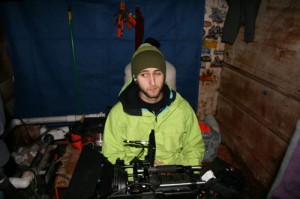 Red camera.
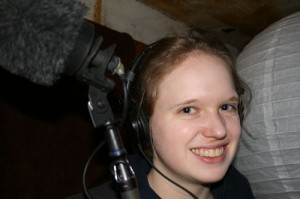 Boom is sending sound to camera and out to video village.
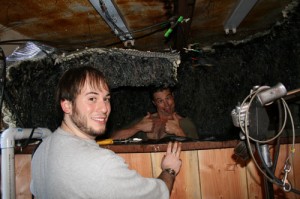 Peter has everything under control.
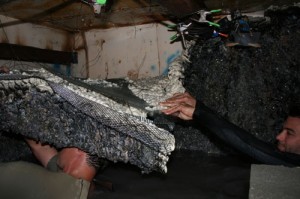 Rockstar Matt Gulley spent the whole shoot in the water with the actors, adjusting lights. Here, he and Peter and making some fine tune adjustments to the set...
 Actors find their places...
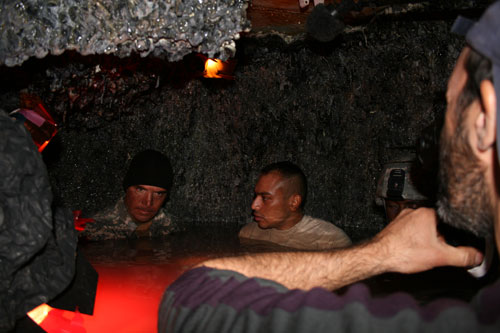 Chuck sets the camera...
 And the shoot looks a little something like this.
 And this.
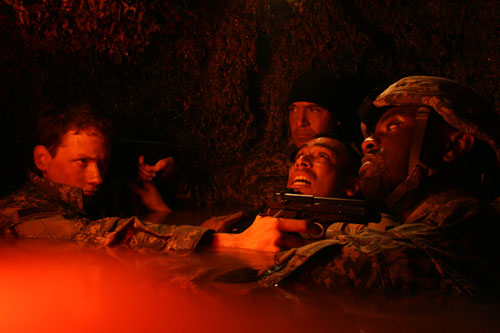 And this.
 That's a wrap!
PS - For an actor's perspective on the shoot, watch Greg Fellow's behind the scenes footage of AIR:
And you can see Greg's "Part Two" video below (the first 48 seconds don't have to do with AIR):
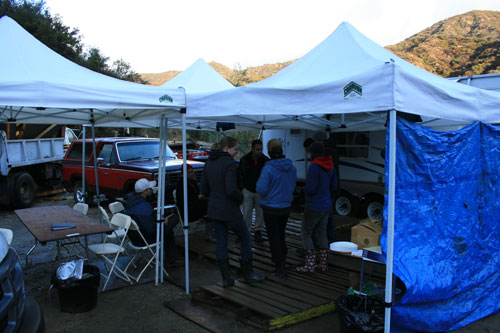 By dawn, base camp is built on wooden pallets in the mud.
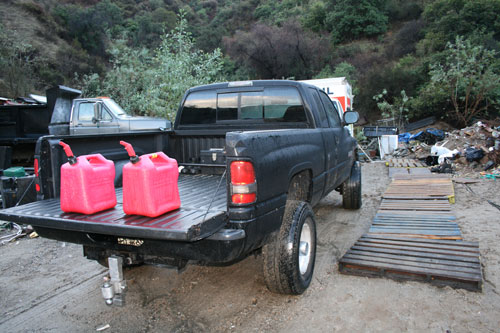 More wooden pallets lead up to set.
 There is no electricity on site. So the entire set is run off of three gennies.
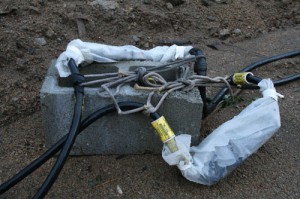 300 feet of bates cables lead power up to set.
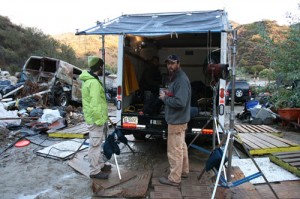 Chuck's office.
 A 12x12 is thrown over the container to block sunlight.
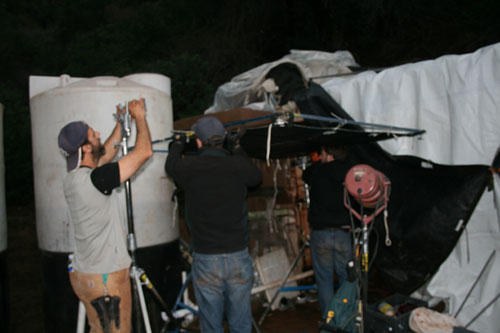 Set, from the outside. I'll take you inside in the next post.
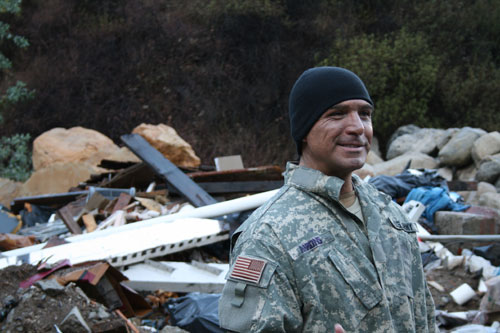 Paul Sloan, heading to set.
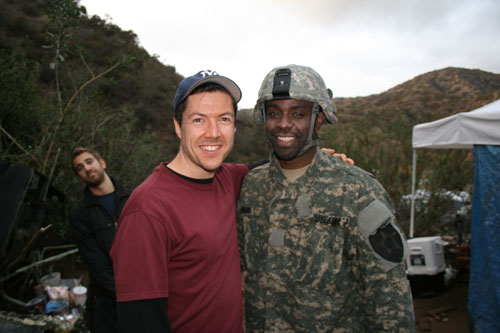 Jon Stokes (me), Brandon Scott. The shoot is a success because the actors and crew stay in amazing spirits.
 Pete Sestina (2nd Second AD) and Jon Stokes (me). We have a dynamite crew - everyone is great at their jobs and I am thrilled.
 Wardobe Designer Ali Kahn is on hand to test outfits and Property Master Pallas Erdrich is on hand testing everything from flashlights to dry ice.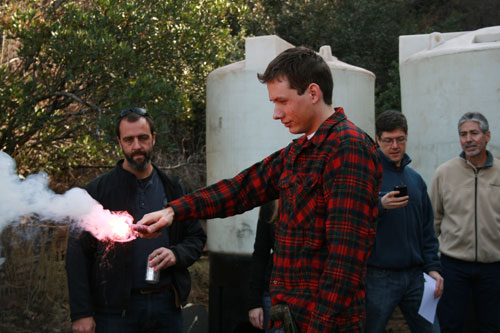
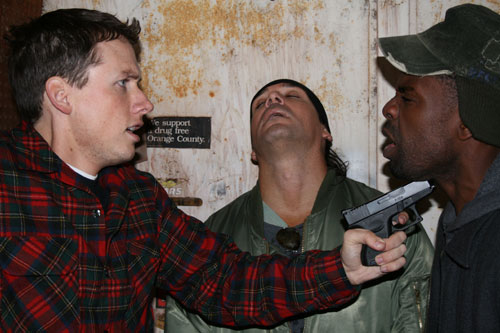
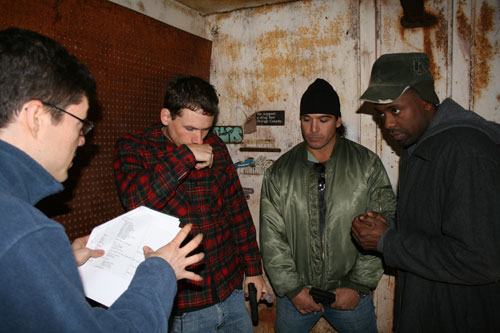 Running through every beat. Rehearsal is so valuable because on set there are a million other things to think about - it's best if the actors have a muscle memory for their role by the time they step on set.
 Randy Wayne, producing.
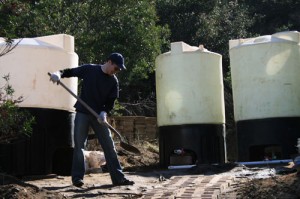 Jon Stokes, directing.
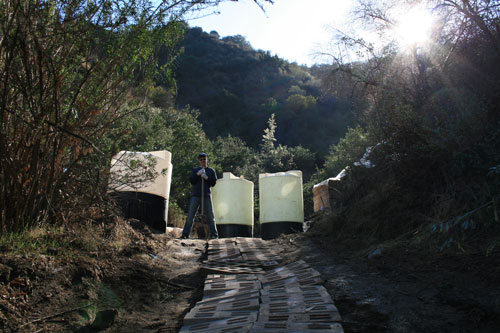 Look at this beautiful brick path. I've found my calling!
 Randy, be careful!
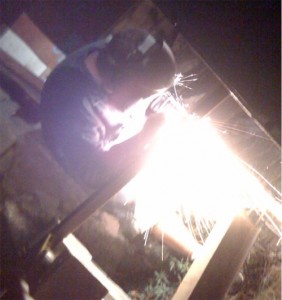 Charlie plasma-torches support beams across a six foot section of the container.
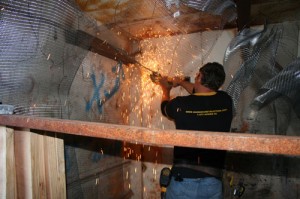 Peter clears out the space to begin hanging aluminum mesh. He also does a lot of math to figure out how much weight and pressure the water will exert.
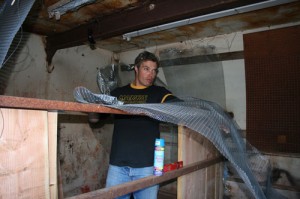 Peter drops in lumber against the welded bars, and begins hanging aluminum to shape the cave.
 The aluminum is screwed into the iron container, which Peter reinforces with several tons of concrete and dirt. Then Peter fits the inside of the cave with a heavy, waterproof liner.
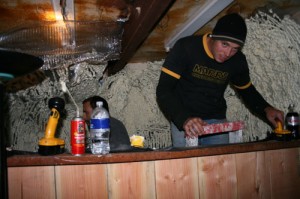 Chuck and Peter spray foaming. It is freezing cold in the mountains at night. We're working off of Peter's flashlight.
 11pm on Friday night. Foam party!
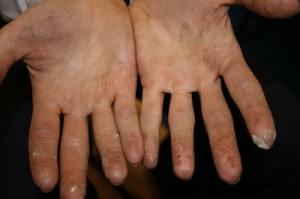 These are my hands at my ballroom dance competition the day after spray-foaming. My poor dance partner had to hold these crusty hands.
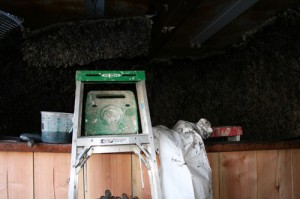 Production Designer Michael Barton puts in three coats of paint in three tints to texture the cave walls.
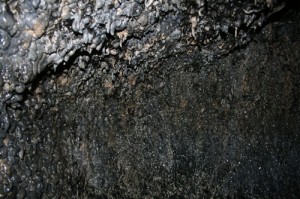 Finally, a fiberglass resin layer is added to water-proof the paint. The resin is toxic so Peter and I have to wear a protective suit with an oxygen mask to apply the coat. I wish I had a picture of this - the outfit is post-apocalyptic.
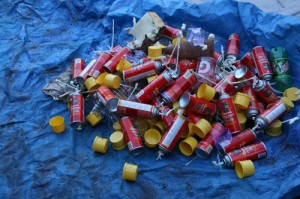 Spray foam, $200. Waterproof cave, priceless.
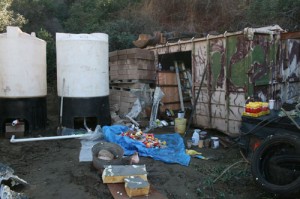 Peter fills the cave with 1400 gallons of water off a water truck and fills two 750 gallon water tanks for standby. If you peek inside the container you can see the cave set.
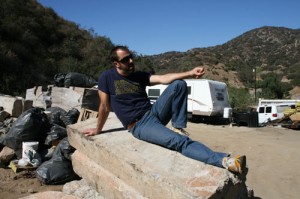 Chuck, in a contemplative pose...
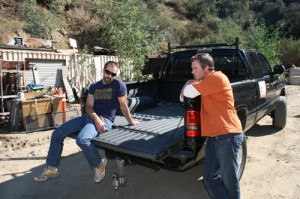 Chuck and Peter in deep thought.
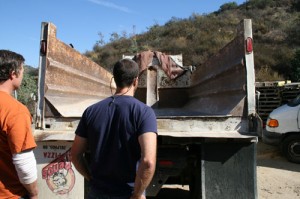 Can we fit a cave in a flat bed?